You are putting on your socks standing up, and you wobble. You have to grab the dresser. You catch your toe on a rug and stumble, your heart racing as you barely stay upright. You reach for something on the top shelf, and your shoulder screams in protest because it won’t stretch that far anymore.
We ignore these little moments. We call them “clumsiness.” But they are the early warning shots of the most dangerous threat to your longevity: The Fall. Falls are the leading cause of injury-related death in women over 65. The journey from “wobbly putting on socks” to “broken hip” is a straight line unless you intervene. And the intervention starts in perimenopause.
The Stiffening: Why We Lose Range
Why do you feel stiffer? Why can’t you touch your toes anymore? 1. The Collagen Shift: Estrogen regulates collagen turnover. When it leaves, your collagen fibers become disorganized and “cross-linked.” They turn from pliable rubber bands into stiff ropes. This happens in your tendons, your ligaments, and your fascia. 2. Frozen Shoulder: This is the hallmark symptom of menopause. The capsule of the shoulder joint becomes inflamed and stiffens. It affects women 40-60 disproportionately. 3. The Dry Joint: As discussed in the “Joint Pain” chapter, the loss of synovial fluid means there is more friction. The body protects the joint by limiting motion.+1
The Balance Glitch: Proprioception
Balance is not just about muscle; it is about the brain. Your body has a “Sixth Sense” called Proprioception. It is the ability to know where your body is in space without looking. (It’s how you can touch your nose with your eyes closed). Nerve endings in your ankles and feet send signals to the brain: “We are tilting left.” The brain replies: “Contract right calf.” This loop slows down with age. The signal gets fuzzy. By the time your brain realizes you are falling, it is too late to correct it.
The “Sit-To-Stand” Test
Do this test right now.
- Stand in the middle of the room. Cross your arms over your chest.
- Sit down on the floor cross-legged. (No hands).
- Stand back up. (No hands, no knees).
This is the Sitting-Rising Test. Studies show that your ability to do this correlates directly with all-cause mortality. If you need a hand, or a knee, or you can’t do it at all, you have a functional gap. You lack the mobility and core strength to navigate your own body weight.
The Toolkit: Fall-Proofing Your Future
You cannot just “be careful.” You have to train stability like an athlete.
1. The One-Legged Toothbrush This is the easiest habit to stack. Every morning and night, when you brush your teeth, stand on one leg.
- Level 1: Hold the counter.
- Level 2: Let go.
- Level 3: Close your eyes. (This takes away visual cues and forces your proprioception to work overtime). This strengthens the tiny stabilizer muscles in the ankles and feet.
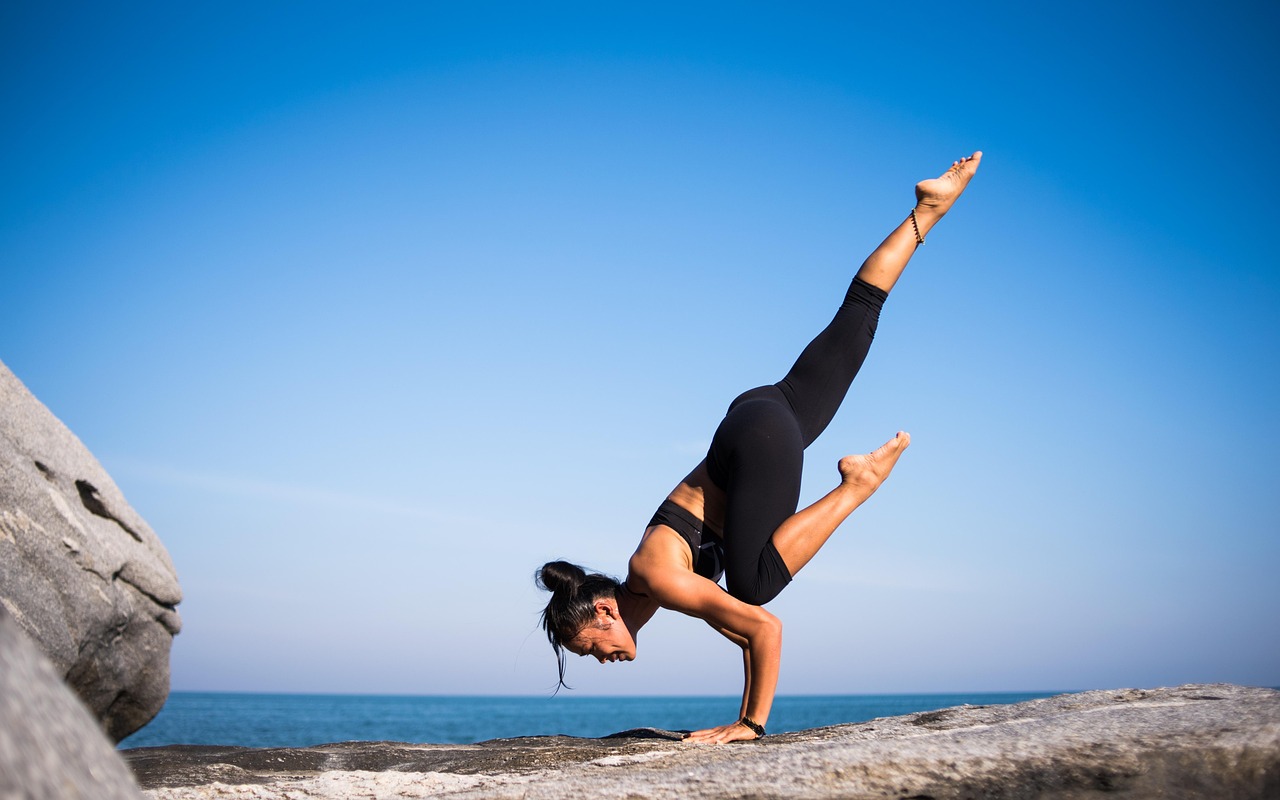
2. Fascial Stretching (Yoga/Pilates) Static stretching (holding a toe touch) is okay, but Dynamic Stretching is better. Yoga moves the joints through their full range of motion, breaking up the “fuzz” (stiff fascia) and keeping the rubber bands elastic. It also trains the vestibular system (balance) by putting your head upside down (Down Dog).
3. Tai Chi (The Fall Preventer) Tai Chi looks slow, but it is scientifically proven to reduce falls in older adults by up to 50%. It teaches “Weight Transfer”—the ability to shift your center of gravity smoothly from one leg to the other without losing control.
4. Protect the Feet Stop wearing thick, cushioned shoes inside the house. You need your feet to feel the floor. If your feet are numb or cushioned, the brain gets zero data. Walking barefoot (or in grippy socks) stimulates the nerves and keeps the map sharp.
Gravity is relentless. It is pulling on you 24 hours a day. Balance is the art of fighting back. Don’t wait until you fall to realize you were unstable.